87% of Student Loan Borrowers Who Try Are Winning Discharge in Bankruptcy
How a 2022 Policy Change Has Transformed the Landscape for Overburdened Borrowers
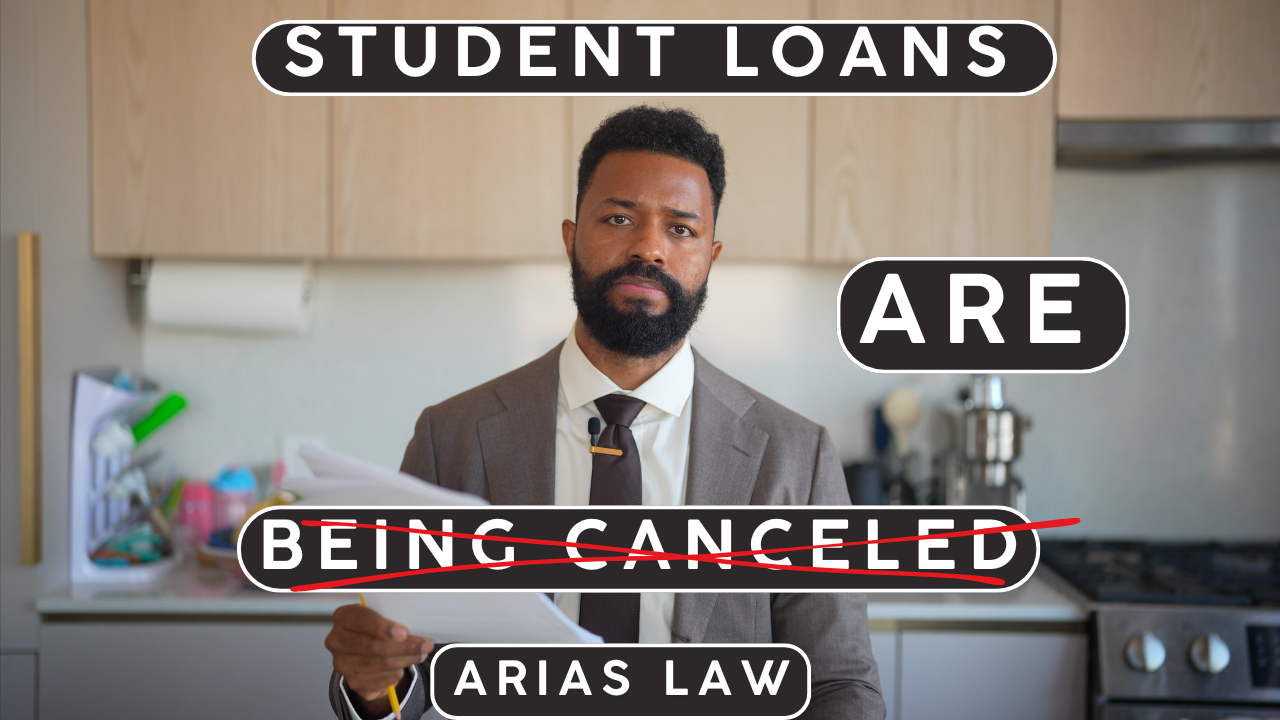
More and more student loan borrowers are wiping out their debts in bankruptcy. According to a recent paper in the American Bankruptcy Law Journal by law professor Jason Iuliano, 87% of people who tried to discharge their student loans in bankruptcy succeeded. This finding completely discredits the long-held belief that student loans are impossible to discharge and that they follow you to the grave. That belief is merely a myth. And this research underscores that there is genuine hope for those overburdened by student debt.
Why the Myth Persists
Before reviewing the data, it's worth understanding why student loans acquired their mythical status as indestructible and why this myth persists. In short, it persists not necessarily because the legal standards are impossible to satisfy, but because the procedure for doing so is complicated, expensive, and time-consuming.
In order to shed student loans in bankruptcy, filing your petition is not enough. It's the first step, but it's not sufficient. The extra necessary step is to file something known as an adversary proceeding (AP). An AP is separate from the petition and operates like a regular federal lawsuit. Since it's a lawsuit, you need to follow the standard procedures: serving your creditors with legal paperwork, going through the discovery process where you exchange information with your creditor, and navigating motion practice where the defense attempts to dismiss your case on the papers. If your case survives these steps, you'll need to convince a judge at trial that your loans should be discharged. And even if you succeed, the other side may appeal.
This extra process is necessary because the Bankruptcy Code gives special protections to student loans, which means they're not automatically dischargeable like other forms of unsecured debt such as credit card bills and medical bills.
You can certainly attempt this process without an attorney, representing yourself pro se, but the federal bankruptcy procedure and the rules of civil procedure are a labyrinth of complicated rules. Attorneys take years to master them.
Cost is the second reason why this myth persists. Your chances of winning are generally greater with a lawyer, but you have to pay their legal fees. These fees are separate from the fees associated with your petition and adversary proceeding. Each step in this process—whether discovery or motion practice—costs money. In one egregious example, a debtor was quoted $40,000 by a law firm because they viewed the process as extremely time-consuming and arduous. As a side note, most attorneys won't charge that much, and if you file for Chapter 13, you may be able to pay your fees over the three-to-five years of your repayment plan. In some circumstances, this means you won't need to put any money down.
The 2022 Policy Change That Changed Everything
2022 was a pivotal year for student loans. That year, while President Biden's attempt to cancel student loans ultimately was overturned by the Supreme Court, what didn't make big headlines was his bankruptcy policy. The administration implemented a policy that drastically eased the student loan bankruptcy process—the one responsible for this 87% success rate.
This policy is presented in a guidance memo to the Department of Justice, which defends the federal government in student loan cases, and to the Department of Education, which administers student loans. The guidance operates like an instruction manual. It streamlines the court process by providing a simple attestation form that's filled and filed with your petition, and it streamlines the legal test for discharging student loans, which ultimately reduces litigation.
Important caveats: First, the guidance applies to federal student loans, not private ones. Second, this policy is not law, meaning the government can disregard it when it wants. Third, the ultimate decision still rests with the judge, who can still deny your case.
Understanding the Legal Standard
The Bankruptcy Code says that certain student loans cannot be discharged unless a bankruptcy judge determines that paying the loan would impose an "undue hardship" on you and your dependents. In 1987, a federal judge in New York elaborated on this rule in the landmark case Brunner v. New York State Higher Education Corporation. That case set forth three requirements you must meet:
First: You cannot presently maintain a minimum standard of living if required to repay your loans.
Second: Your circumstances indicate that your bad present financial situation will likely persist into the future for a significant portion of the loan repayment period.
Third: You made good faith efforts in the past to repay the loans.
This is the dominant test used throughout many federal courts. Other jurisdictions use the "Totality of Circumstances" test, which considers all your circumstances to determine undue hardship. Both tests essentially consider the same information: your financial profile, your future financial profile, and your past efforts.
The difficulty with these factors lies in their subjectivity. For example, how is one to judge a "minimum standard of living"? Is eating out twice a month extravagant? In one case, a judge ruled that eating McDonald's once a week wasn't thrifty enough and thereby denied the person's request. In some cases, judges have required debtors to demonstrate a "certainty of hopelessness" about their financial future to prevail. That seems pretty bleak and dire.
How the New Guidance Works
The guidance essentially directs government attorneys to collaborate with you and take a less adversarial approach. It presumes you've satisfied the test if you meet certain criteria, and it directs the government to recommend a discharge to your judge.
Factor One: Present Inability to Pay
The guidance presumes you can't pay if your allowable expenses exceed your gross income—that is, if you spend more than you make. These expenses are outlined in the IRS Financial Collection Standards, broken down into national standards (food, housekeeping supplies), local standards (housing, utilities, transportation), and other necessary expenses (child care costs).
Regarding national standards, the guidance allows you to expense your actual cost even if it falls below the standard amount. For example, the 2025 standard for food in a two-person home is $863. But if you actually spend $600, you can expense the full $863. The guidance also allows you to expense actual costs above the standard if you have a reasonable explanation—perhaps you or your dependents have special dietary needs.
For local standards, the guidance limits expenses to your actual costs. In Brooklyn, for example, the standards allow $4,034 per month for housing and utilities, but if you actually pay $3,500, the guidance will limit you to what you actually pay.
Importantly, the guidance also allows you to expense things you aren't currently spending on but need to maintain a minimum standard of living. For example, if you moved back in with your parents to save money, the guidance will let you expense what you would pay if you found an apartment. The premise is that people shouldn't be required to live in subpar housing indefinitely. The purpose of the bankruptcy system is to give you a fresh start.
Even if your income exceeds your expenses, the government may recommend a partial discharge if what you would pay wouldn't realistically pay off your loans entirely.
Factor Two: Future Inability to Pay
The guidance presumes your inability to pay will persist if you fall into certain categories: if you're 65 or older; if you have a disability or chronic injury impacting your earning potential (a doctor's note is extremely helpful); if you've been unemployed for at least five of the last ten years; if you failed to obtain the degree for which the loan was procured (perhaps your school closed down or defrauded you); or if your loan has been in payment status (other than "in school") for at least ten years.
These categories aren't exclusive. If there's any other fact that supports your case, you should raise it. These presumptions are rebuttable, meaning the government can push back if it has concrete evidence that your financial circumstances will improve soon.
Factor Three: Good Faith Efforts
Overall, case law establishes that your loans won't be discharged if you willfully contrived a hardship to discharge student loans. This factor assesses your efforts to find work, maximize income, and minimize expenses—whether you've been financially responsible.
The guidance presumes you've acted in good faith if you've done any of the following: made a payment (not even multiple—just one); applied for a deferment or forbearance; applied for an income-driven repayment plan; applied for a federal consolidation loan; responded to outreach from a servicer or collector; or "meaningfully engaged" with the Education Department or loan servicer regarding payment options.
The most helpful factor seems to be enrollment in an income-based plan. Even if you haven't enrolled, the guidance directs the government to consider why. For example, if you experienced errors or malfeasance from your servicer—hour-long wait times, poor advice, administrative errors—the guidance acknowledges this and gives you the benefit of the doubt. Many servicers have been sued on multiple occasions for violating consumer protection laws.
What About Your Assets?
Exempt assets are assets the bankruptcy system allows you to keep, so long as their value doesn't exceed certain limits. Courts around the country haven't reached unanimous agreement on whether these assets should be considered in determining student loan discharge. Some courts have ruled they should be considered; others have ruled they should not.
The guidance takes a lenient approach: government attorneys should not give dispositive weight to assets that are not easily converted to cash or are otherwise critical to your well-being. It recognizes that selling a primary residence or pulling from a retirement account can be an extreme measure.
The Data: 87% Success Rate
Professor Iuliano collected all student loan adversary proceeding cases filed during the first year of the policy (2022 through November 2023). The study analyzed 652 cases and found that among those that reached a final outcome, 87% resulted in a full or partial discharge.
The resolutions broke down into three categories. Successful outcomes resulted in settlements where creditors offered to discharge debt, default judgments where creditors didn't put up a fight, or discharge on the merits after trial. Of successful cases, 87% settled for full or partial discharge, 1% ended in default judgment, and only one case ended with a decision on the merits.
Neutral cases—those dismissed without prejudice—made up 10%. Iuliano points out that in all likelihood, these debtors dismissed their cases because they secured settlements outside of court. He reviewed these cases individually and found that in several, the parties jointly stipulated to dismiss with each side bearing its own costs—a strong indication that debtors received favorable settlements.
Unsuccessful cases—where the debtor lost—made up only 1% (six cases total). In four of these, the government determined the debtor did not meet the requirements.
Who Are These Debtors?
The average age of debtors in the study was 47, with a median of 46. The youngest was 24 and the oldest 76.
The average amount of assets held was $75,000, with a median of $23,000. This indicates that a small number of debtors held substantially more assets, so don't let these numbers discourage you.
In terms of student debt, debtors owed an average of $115,000, with a median of $77,000. At the tails of the distribution, the top 1% owed more than $540,000, with the highest debtor owing just under $700,000. At the other end, debtors in the lowest 10% owed less than $20,000, with the individual owing the least at $2,103.
These individuals were balance sheet insolvent, meaning they owed more than they owned. The average net worth was negative $134,000 and the median was negative $94,000. They were also cash flow insolvent, with expenses exceeding income. Mean monthly income was $3,300 (median $3,000); mean monthly expenses were $3,500 (median $3,100).
How Much Debt Was Discharged?
For those in the successful category, borrowers eliminated an average of $85,000, with a median of $67,000. Those who received relief eliminated an average of 97% of their student loans, and the median amount eliminated was 100%.
Can You Do This Without a Lawyer?
Interestingly, 11% of the sample represented themselves. Of these, 61% succeeded. This means even if you pursue this on your own, you have a better than 50-50 chance of winning some relief—better odds than flipping a coin. This will require substantial work, but if you follow the instructions and put in the effort, it can be done.
Cases are also moving faster. In 2007, these cases lasted an average of 392 days. In 2017, the average fell to 334 days. After this reform: 266 days. People are winning more and doing it faster.
How Long Will This Opportunity Last?
The pressing question is how long this will last. The honest answer: I don't know, but my educated guess is not forever. This is merely a policy, not a law, and it can be rescinded at any time.
This policy was implemented during the Biden administration, which adopted a lenient and cooperative approach to student debtors. The current administration has taken a different approach, firing employees from the Education Department and even attempting to abolish it entirely. The administration recently announced it will garnish wages of borrowers in default.
At the same time, the DOJ might not have the capacity to vigorously defend these cases right now. A recent New York Times article reported that DOJ attorneys are depleted and distracted, worried about their ability to identify and stop terrorist plots, cyber attacks, and mass violence. Compared to these responsibilities, fighting over student debt may not be their priority. Their lack of focus could work in your favor.
The Bottom Line
Bankruptcy should not be your first option. It should be your last resort, only after you've attempted everything you could to fix your financial circumstances. But if you've reached the educated decision that bankruptcy might be your best option, the data shows that student loan discharge is far from impossible. With an 87% success rate among those who try, the myth that student loans are indestructible has been thoroughly debunked.
If you're considering this path, consult with a bankruptcy attorney who can evaluate your specific circumstances and guide you through the process.
* * *
Jonathan Arias, Esq.
Arias Law
Website: AriasEsq.com
Email: Jonathan@AriasEsq.com
Phone: (914) 768-1498